
A Building collapsing in a busy city. Picture a person flying between skyscrapers. Or see a terrifying creature rising from the ocean. You might wonder, “How did they actually do that?” The answer often involves VFX. But what is VFX, and how does it make these amazing scenes look real?
The Digital magic that helps filmmakers create scenes. These scenes might be impossible, dangerous, or too expensive to film. VFX stands for Visual Effects. It involves creating or modifying images using digital tools. These tools add imaginary scenes, creatures, settings, and effects to videos and films.
From superhero movies to product advertisements, VFX helps artists turn ideas into believable visuals. And here’s the interesting part: you don’t need to be a filmmaker to learn how it works. With the right skills, software, and plenty of practice, you can start creating visual effects yourself.
What Is VFX, and Why Does It Matter?
VFX, or visual effects, helps artists add digital elements to videos and movies. They add things that cameras cannot capture, remove unwanted objects, change backgrounds, and create amazing scenes.
For example, a film crew may shoot an actor on a normal set. VFX artists then create a huge alien spaceship on a computer and add it to the scene. This makes it look like the actor is standing in front of a real spaceship.
The goal of VFX is not just to make scenes look amazing. Good VFX makes viewers believe what they see on screen. Artists match lighting, shadows, colours, and movement to make digital elements look real. That’s what makes VFX so interesting. Sometimes, the best VFX is the kind viewers never notice.
How Does VFX Actually Work?
A VFX shot may look like one real scene, but artists often create it by combining different elements. Here’s a simple look at how they put a shot together.
1. Plan the scene
Before filming, the director and VFX team plan how the final scene should look. They decide the camera angle, lighting, actor movements, background, and digital elements.
For example, a character may need to stand on the edge of a futuristic city. The team plans how to blend the actor into the digital city. Good planning makes the next steps easier.
2. Shoot the original footage
The crew captures the real parts of the scene. Actors might perform on a physical set, outdoors, or in front of a green screen. A green screen helps artists remove a plain background and replace it with another image. An actor can stand in a studio while the finished scene shows a desert, a spaceship, or a city floating above the clouds.
Green screens aren’t necessary for every Visual shot. Artists can also work with outdoor footage, practical sets, and objects already present in a scene.
3. Create digital elements
Next, VFX artists create the digital elements needed for the scene. These may include creatures, vehicles, buildings, explosions, or imaginary landscapes. Different artists handle different tasks. A 3D modeler shapes a digital creature. A texture artist adds surface details. A lighting artist makes it look natural in the scene.
4. Combine the elements through compositing
Compositing means combining multiple visual elements into one image. A VFX artist combines different elements, such as an actor, a digital spaceship, a background, smoke, and lighting effects. They adjust colours, edges, and shadows to make everything look like part of the same scene.
For example, a bright spaceship may look out of place in a dark scene. A compositor adjusts its colours and lighting to make it blend naturally with the background.
5. Render, review, and refine
Rendering turns a digital scene into images. The team can review them and use them in the final video or movie. Artists check these images, find mistakes, and fix them. Complex scenes may need several rounds of changes before the director feels happy with the result.
Even a few seconds of VFX can take hours of work and teamwork. Every small detail helps make the scene look real.
VFX vs Animation vs Motion Graphics
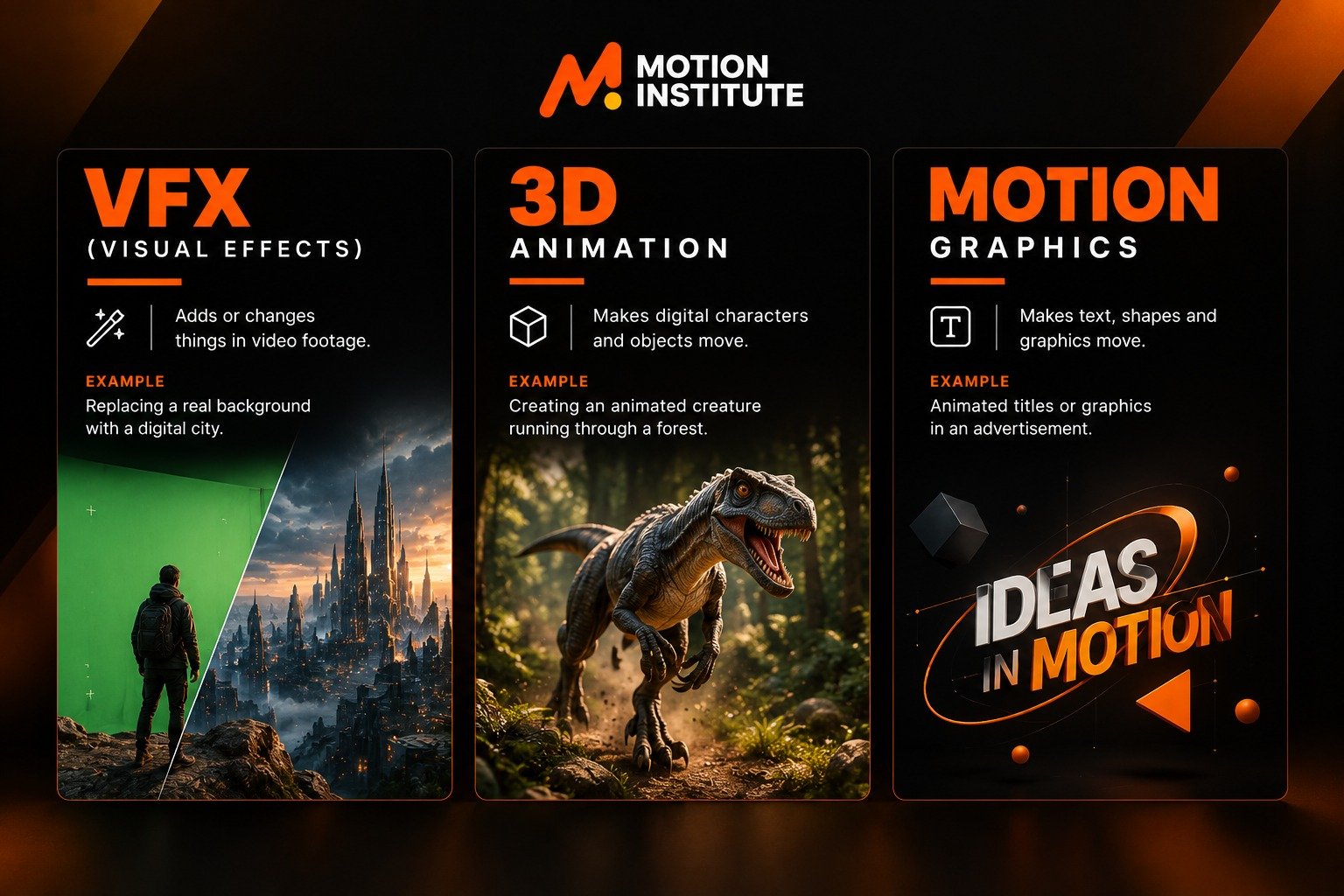
VFX, animation, and motion graphics often overlap, but each field has a different focus.
| Field | What It Does | Example |
|---|---|---|
| VFX (Visual Effects) | Adds or changes things in video footage. | Replacing a real background with a digital city. |
| 3D Animation | Makes digital characters and objects move. | Creating an animated creature running through a forest. |
| Motion Graphics | Makes text, shapes, and graphics move. | Animated titles or graphics in an advertisement. |
Here’s an easy way to remember the difference. VFX often combines real footage with digital elements. Animation focuses on movement in characters and objects.
Motion graphics use movement to communicate ideas, information, or visual messages. These fields can work together, too. A VFX scene might include an animated creature, while an advertisement might combine live-action footage with motion graphics.
If you’re deciding what to learn, start with the work that interests you most. You can explore related skills as your understanding grows.
Where Do You See VFX Every Day?
You don’t have to watch a high-budget film to find visual effects. VFX editing appears in many kinds of content you probably see every day.
Movies & web series
Fantasy worlds, digital creatures, collapsing buildings, impossible stunts, and large-scale action scenes often rely on VFX. Artists also remove visible wires, unwanted equipment, and other objects that distract from a shot.
Advertisements
Ever seen a product floating in mid-air? A car driving through an impossible landscape? Or a drink surrounded by dramatic splashes? It helps brands create these visuals without physically building every element.
Music videos
Production teams use visual effects to change locations. They add digital objects and create surreal settings. These effects give music videos a distinctive look.
Social media videos & Reels
Creators use background replacement, object removal, tracking, compositing, and other effects to make short videos more engaging. Some effects use simple mobile tools, while others require advanced editing and compositing techniques.
Games & virtual production
VFX-related skills also support game cinematics, digital environments, and virtual production. These projects can combine real-time 3D graphics with camera footage to create immersive scenes. The common thread is simple: VFX helps people show something that ordinary filming alone might struggle to capture.
Is VFX a Good Career Option?
It can be a great career for people who enjoy creativity, technology, and solving problems. But enjoying movies alone is not enough to succeed in this field. VFX artists need patience, technical skills, and teamwork. They must also make changes to their work when needed and keep learning new software and techniques.
What career options can you explore in VFX?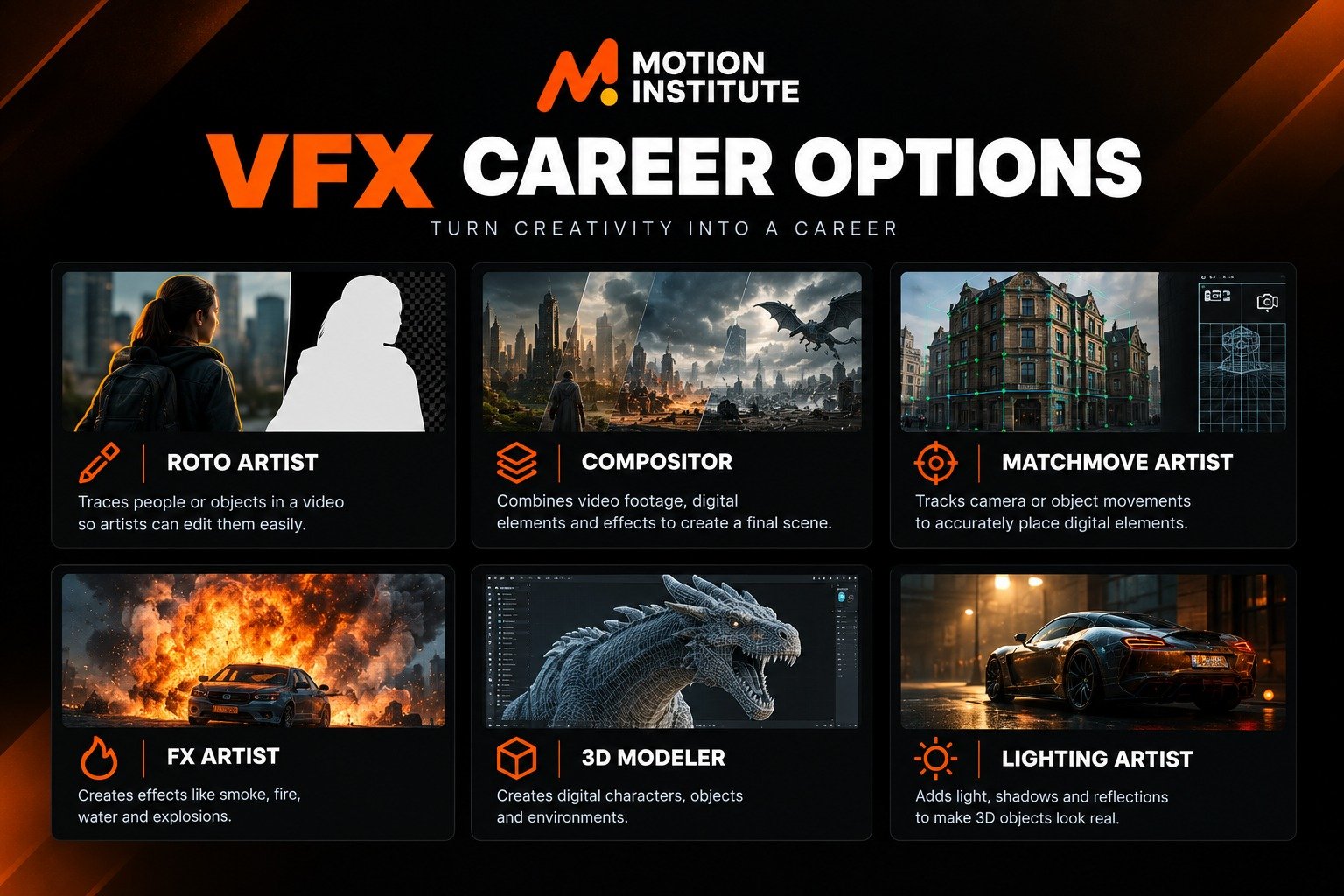
VFX includes several specialised roles. You don’t need to master all of them at once.
- Roto Artist: Traces people or objects in a video so artists can edit them easily.
- Compositor: Combines video footage, digital elements, and effects to create a final scene.
- Matchmove Artist: Tracks camera or object movements to accurately place digital elements within a scene.
- FX Artist: Creates effects like smoke, fire, water, and explosions.
- 3D Modeler: Creates digital characters, objects, and environments.
- Lighting Artist: Adds light, shadows, and reflections to make 3D objects look real.
Beginners usually learn the basics. They try different types of VFX work. Then they choose a specialisation that fits their skills and interests.
What skills do you need to become a VFX artist?
Technical skills are important in VFX, but you also need other skills to create realistic effects.
- Observation: Notice how light, shadows, reflections, and movement work in real life.
- Visual Skills: Learn about colours, lighting, angles, and how to arrange things in a scene.
- Software Skills: Learn tools for editing videos, creating 3D objects, and adding effects.
- Problem-Solving: Find out why an effect looks fake and learn how to fix it.
- Attention to Detail: Check small details like edges, shadows, and movements to make effects look real.
- Patience: Keep practising and making changes until the scene looks right.
Blender is a good starting tool for beginners. You can use it to create 3D models, animations, visual effects, and more. Learn about its features on the official Blender VFX page.
You don’t need to learn every software at once. Start with the basics, practise regularly, and choose tools based on the type of VFX work you want to do.
How long does a VFX course take?
The duration of a Visual Effects course depends on the course content, training, and practice time. A short VFX course may take around 3–6 months, while a more detailed course may take 6–18 months or longer. The exact duration depends on the institute and course structure.
Before you choose a VFX course, check if it includes practical tasks, software training, teacher feedback, and projects. These will help you build your portfolio.
What is the VFX artist salary in India?
A VFX artist’s salary in India depends on their experience, skills, portfolio, and the company they work for. According to Glassdoor, the average base salary for a Visual Effects artist in India is about ₹25,000 per month. The typical range is ₹18,000 to ₹40,000 per month. These figures may change over time. You can check the latest VFX artist salary data on Glassdoor.
Keep in mind that these are only estimates, not guaranteed salaries. Beginners may earn less, while experienced artists with strong skills can earn more. Your practical experience and portfolio can make a significant difference.
Which Creative Skill Should You Learn First?
VFX belongs to a wider creative industry, and related skills can complement one another. Here’s a quick comparison to help you decide where to begin.
| Skill or Field | What You’ll Learn | Course Duration |
|---|---|---|
| Video Editing | Editing clips, adding audio, and telling stories through videos | 3–12 months |
| Motion Graphics | Creating animated text, graphics, and designs | 4–12 months |
| 3D Modeling & Animation | Creating, designing, and animating 3D objects | 6–18 months |
| VFX | Combining video footage with digital effects and creating realistic scenes | 6–18 months |
These are just general examples. Course duration varies by institute and the type of training. You’ll also need regular practice to build professional skills.
If you enjoy telling stories through videos, start with video editing. If you like creating digital objects and worlds, explore 3D animation. If you enjoy combining real footage with digital effects, Visual Effects could be a good choice for you.
You can explore Motion Institute’s guides on Video Editing, Motion Graphics, and 3D Modeling. They help you understand how these related skills differ.
How should you choose a VFX course?
Before joining a Visual Effects course, ask a few simple questions:
- Does the course teach the VFX basics you need?
- Will you get to practise using VFX software?
- Does the course include practical assignments?
- Will teachers check your work and help you improve?
- Will you create projects for your portfolio?
- Does the course fit your budget, schedule, and skill level?
When comparing VFX course fees, check what each course includes, such as software training, practical work, teacher support, and projects.
A cheaper course isn’t always the best option, and an expensive course doesn’t always offer better training.
Learning VFX in Kotdwar, Uttarakhand
You don’t have to learn everything on your own. A good training programme can help you learn the basics, practise your skills, and get feedback from teachers.
Motion Institute in Kotdwar, Uttarakhand, offers courses in VFX, 3D Modeling & Animation, Video Editing, and Motion Graphics. If you plan to join a VFX course, check the syllabus, practical training, teacher support, and portfolio projects first.
Visit the Motion Institute website to explore its industry-standard courses and training options. Start with the basics, practise regularly, and focus on building the skills you need for your creative career.
FAQ: Visual Effects
What does VFX stand for?
Its full form is Visual Effects. Artists use digital tools to create or modify images in films, advertisements, web series, and other video content.
Is VFX difficult to learn?
Learning VFX takes practice. You need to learn the software, understand how things look in real life, and solve problems. Beginners can start with simple effects and move on to more complex projects as they improve.
Can I learn VFX after 12th?
Yes, you can learn this after Class 12. You can join a beginner course or start learning on your own. Check the course requirements and practise by creating projects to build your skills.
Do I need drawing skills to learn VFX?
No, you don’t need drawing skills for every VFX job. Many roles require software skills, attention to detail, and problem-solving. Drawing can help in some areas, but it’s not always necessary.
Which software do Visual artists use?
VFX artists use different software for tasks like adding effects, creating 3D models, tracking movement, and editing videos. Blender is a useful tool for beginners because it offers several 3D and Visual features in one place.
What is the difference between VFX and animation?
VFX adds or changes things in video footage using digital effects, while animation makes characters, objects, or graphics move. Both fields often work together to create scenes that combine real footage with digital characters or environments.
What is the average VFX artist salary in India?
According to Glassdoor, VFX artists in India earn an average of around ₹25,000 per month. Most salaries fall between ₹18,000 and ₹40,000 per month. Your actual salary may vary depending on your experience, skills, portfolio, location, and the company you work for.
How much does a VFX course cost?
VFX course fees depend on the institute, course duration, and training. Before enrolling, compare the fees, software training, practical projects, and teacher support to find the right course for your needs.
The Magic Is Easier to Learn Than You Think
The next time you see a building vanish, a digital creature come to life, or a plain room look amazing, remember VFX. Behind every scene, artists use tools, skills, and creativity to make it feel real.
Want to explore VFX? Start with a simple project, keep practising, and let your creativity take you further. Your VFX journey could start today!
You don’t have to create movie magic on day one. You just have to make your first shot.
